Back Pain in Children – Symptoms, Causes and Treatment

Back Pain in Children

Did you know that 30 in 100 kids and adolescents experience back pain, but not many visit the doctor. Back pain in Australian children and young adults is fairly common nowadays. It is also more prevalent in females than males. Poor posture, sprains, fractures, inappropriate forms of exercise and heavy backpacks are some of the causes of back pain in older children.

Inflammatory diseases, injuries to bones and joints and sciatica, to name a few, are included in a range of serious medical conditions like that may lead to severe back pain among children. A child with back issues is likely to have chronic backache as an adult.

Let’s be honest, smaller kids are physically active and get injured all the time. While it is not necessary to be concerned about pain resulting from casual injuries caused by jumping about, a bad fall or slamming into a wall, you must visit a doctor if your child complains about persistent pain in a particular area of the back for more than a week.

Symptoms of back pain from a serious underlying disorder

You should be worried if a child as young as 4 years or less complains of a backache for several days. There are a few things to keep in mind, if the pain is accompanied by fever, weight loss, weakness, walking troubles, bowel and bladder problems, and sleepless nights, there is a chance your child suffers from a serious medical condition. Visit the doctor at the immediately as early identification is crucial for proper treatment of a back issue.

Medical conditions that cause back pain in children & adolescents

The following conditions are a rare occurrence among children, but it is not impossible your child’s back pain is being caused by an undetected serious medical condition

  • Injuries to bones and joints include compression fractures or a slip disc.
  • Fibromyalgia is a chronic disorder that causes muscle spasm and fatigue.
  • Sciatica is the compression of the sciatic nerve that causes radiating pain from the lower back, buttocks and legs.
  • Scheuermann’s disease is a growth disorder of the vertebrae and affects adolescents
  • Spondylosis is a structural defect of the vertebrae causing pain from the hyperextension of the spine through strenuous activities like sports and gym
  • Infections – Discitis, Osteomyelitis, Pyelonephritis, Retroperitoneal infection
  • Tumours on the bone or spinal cord
  • Congenital disorders

Treatment and preventive measures

Doctors start the treatment process by asking a few questions about the child’s general health and specifically the acute back pain. They will make a detailed physical examination to check the site of the pain, the physical appearance of the patient’s back, any tenderness on the back, the nervous system and lastly the patient’s gait and ability to bend.

This is generally followed by some blood tests and X-rays or in more serious cases, a bone scan, a CT scan or an MRI.

In most cases, a child’s back pain is relatively short lived and does not need specific treatment. Your doctor might even work with an osteopath or physiotherapist to help relieve his pain. However, if you feel the need to take help from professionals, and you don’t want to expose your child to a flurry of hospital visits, you can check into an osteopathy clinic for a healthy and holistic alternative treatment.

Also, there are a number of details in a child’s everyday life that can lead to the prevention back pain. For example,

  • How you pack your child’s backpack
  • Improved posture during long school hours
  • Less of sedentary lifestyle – sitting in front of the telly or a computer
  • Cushioning the play area for bad falls
  • Avoiding an overdo and over-exertion from any sports related activities
  • Plenty of stretches and exercise throughout the day

The above-mentioned are some areas to keep a check on in order to successfully prevent back pain in children and lead a healthy, stress-free life in general.

Sources:

https://www.betterhealth.vic.gov.au/health/conditionsandtreatments/back-pain-children

http://orthokids.org/Condition/Back-Pain-in-Children

https://patient.info/bones-joints-muscles/back-and-spine-pain/back-pain-in-children

https://orthoinfo.aaos.org/en/diseases–conditions/back-pain-in-children/

What’s the Difference Between Migraines and Headaches?

Headaches are the most common health issues faced by people in their everyday lives. Almost everybody, at some point has suffered from a headache. Most people make the mistake of identifying any headache as ‘migraine’. There is a veritable difference between the two. It is important to understand the difference between a traditional headache and a migraine in order for faster pain relief treatment.

headache vs migraine

Headaches occur when the nerves in the scalp, blood vessels and other brain tissues signal out to the brain cells and it is identified as ‘pain’. They are generally unpleasant, dull aches that emanate from both sides of the head. Pain in the temples, forehead or even the back of the neck can be identified as a headache.

Migraines, on the other hand are a definitive throbbing pain, generally on one side of the head that is accompanied by nausea, vomiting and sensitivity to light and sound elements around.

Women are more affected by migraines than men. People with migraine generally experience something called an ‘aura’ before the throbbing pain starts. An aura is a visual or sensory symptom that lets the migraineur (person suffering from migraine) know about the upcoming pain so that they can be prepared to take measures for migraine relief.

Types of Headaches

A tension headache is the most common type triggered by stress, muscle strain and anxiety. Sometimes, digestion related issues or even long stretches of hunger give rise to a typical tension headache.

A cluster headache occurs in bouts. There will be cycles of extreme pain followed by ache-free periods and then again a cluster of headaches generally follow with throbbing pain on one side of the head.

A sinus headache can be easily confused with a migraine. This occurs due to a common cold problem. Stuffy noses, congestion and other symptoms of a sinus infection like fever or facial pressure gives rise to a sinus headache.

A fatal type of headache developing in less than 60 seconds from an aneurysm or a stroke is known as the Thunderclap headache. This is a serious condition that could also occur due to a subarachnoid haemorrhage. An immediate medical examination is highly recommended if you feel like you’ve developed a sudden throbbing headache that is intensely painful.

How to identify symptoms of Migraine

Typical migraine symptoms include temporary vision loss, ‘spots’ in the vision, acute pain behind one eye or ear, pain in the temples, extreme sensitivity to audio-visual elements, specially lights along with the most common – nausea and vomiting. If one or more of the above symptoms accompanies your headache, it is time to get treated for migraine.

One way to combat intense pain from migraine is to be alert whenever the aura hits a patient. An aura is a sensation that the patient will feel around 20-30 minutes before a migraine attack. This could be a sudden inability to think clearly, a tingling sensation on the face, jarring flashy lights in the vision or being overpowered by an unusual taste, touch or smell.

It is advised that one should be prepared for any sudden pain, whether it is a common headache or migraine. The latter is generally more serious and is a lifetime illness that could be accompanied by other conditions like depression, irritability or unusual food cravings. It is best to get yourself diagnosed at the earliest onset. If you feel like you have symptoms of a migraine problem, you should immediately consult a doctor and get a suitable treatment in place.

If you live in Melbourne, you can search for Melbourne Osteopaths for hands-on pain relief management of migraines and chronic headaches.

Exercises to Relieve Shoulder Pain

shoulder pain exercise

Shoulder pain is a common menace in our tightly scheduled lives. Long hours of working or sleeping in the wrong position can bring on the worst cases of shoulder pain that affects us relentlessly. As a Melbourne Osteopath, we often see patients with a bad shoulder and here are some simple exercises that can help bring pain relief.

Neck & shoulder release

Sit straight on a mat or the edge of a chair. You can sit on a rolled towel or a small cushion for additional back support. Slowly bring your chin down towards your chest. You will feel the release at the back of your neck. Now for the shoulders, in the same position, place your hand on the side of your head and stretch your neck to your right to release tension on the left shoulder and vice versa. Keep doing these stretches for about a minute. Repeat the whole exercise 2-3 times.

Scapular Movements

Scapular Movements

This is one of the simplest exercises to help relieve shoulder pain. You will need some time to try and isolate your shoulder blades. Stand in an upright position and start moving your shoulder blades up, then away from each other and lastly down towards the lower portion of the body. Hold each alignment for about 15 seconds. Remember, your blades need to move for only about a centimeter away from their original position. Most of us are not aware of how these basic shoulder blade stretches can effectively bring about pain relief. They are easy to pull off and can be done practically anywhere – you do not even need a lot of space, just enough to stand upright.

Cow Face Pose

Cow Face Pose

While seated, or even in a standing position, put your right arm up straight.

Slowly let your elbow free and let your hand fall back down behind your shoulder.

Take your left arm from the side and try to hold the other palm from behind your back.

If you cannot reach your fingertips, try this exercise with a piece of towel.

Stay in the position for 10 seconds and then repeat with the other hand.

Continue this exercise for 3-4 times for ample relief from shoulder pain.

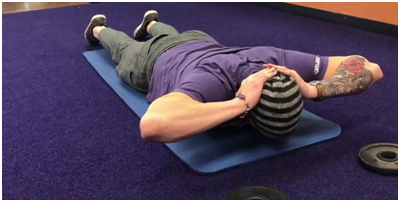
Handcuff Drill

Handcuff Drill

Lie down flat on a mat with your face down towards the floor. Place your palms on the back of your head. Your arms should be jutting out from the sides. Now slowly extend your arms outwards to make a Y shape. Circle your palms to your lower back. Now reverse the step and take your arms back to the starting position. Repeat this movement from 10-12 times.

Bent arm shoulder stretches

Stand upright with your legs slightly stretched out apart. Bend your keens slightly to make your movement flexible. Now bend your left arm in a way that the elbow faces downwards and there is a little bit of a space in between the upper and lower portion of your arm. You can place your left palm on the side of your head for better support. Now take your right hand and place it in the space above your left elbow. Stretch out your right hand and apply pressure on it with your other arm. These stretches should apply pressure on your right shoulder. Stay in the position for as long as it relieves your right shoulder pain and then reverse the position with your other hand.

Basic exercises can bring you a certain kind of relief but only to an extent. If you think your pain is out of control, immediately seek medical help or google “osteopath near me” to get a postural assessment done. It is better if you get serious treatment for acute and chronic conditions before they get out of your hands.

Yoga for Neck Pain- 5 Exercises to Help Relieve Neck Pain

Got a Tech Neck from working those long hours, or just a shooting crick from sleeping bad; these simple yoga exercises can help you release tension from your neck and back. Yoga is one of the oldest forms of treatment for muscular pain . You don’t need much time or equipment to follow through with these yoga tricks to help you with your neck pain. Just a mat, less than 10 minutes and you might be feeling much better!

Here are 5 easy yoga exercises for helping relieve neck pain:

Seated neck tilt

Start your routine with this light exercise perfect for stretching your neck muscles. You can use yoga blogs or a yoga pillow to make yourself comfortably seated. You can do these stretches while sitting on a soft mat or a chair as well.

Before starting, make sure your head is held high up in the air and you are sitting in an upright position. If you’re using a yoga mat, make sure you are sitting cross- legged. Inhale and gently tilt your neck to the right side. You need not bring your ear close to the right shoulder, just elongate your neck to the right side.

With the opposite hand, (left, in this case) gently press your head to elongate your neck to the other side. Take a couple of breaths in this position; exhale and change over to the other side. Continue this exercise for 3-5 minutes, taking 3 breaths on each side.

Reverse Prayer Pose

Also known as the Penguin pose, you can practice this exercise while seated in a kneeling position or in a standing position.

  • Relax your arms on either side of your body
  • Slowly bend your elbows to stretch to reach out towards your back
  • Join your hands at your spine staring with your fingertips
  • Slowly press your palms against each other to form the praying hands
  • Stay in this position and take 5-10 breaths

This is a great exercise not only for neck pain, but also chronic back problems.

Forward fold with neck traction

Release tension on your neck and shoulders by stretching out your cervical spine.  Start with standing in a position wherein your legs are at a hips-wide distance from each other.

Gently fold forward and drop your arms while your chest rests on your belly. Inhale while you let gravity help you do this stretch while you completely let go of your hands.

Slowly pull your hands around the nape of your neck and exhale. Stay in this position for about a minute before starting over.

Cobra Pose

This is one of the easier backbend stretches apt for releasing tension around the shoulders, back and neck area. The cobra pose helps ease extensive neck pain, increases spine flexibility and relieves stress in the upper body by stretching the shoulder and chest muscles.

  • Lie down flat on your belly with your palms on the floor under your shoulder.
  • Squeeze your thighs and lift your kneecaps
  • Lift your chin up, keep your neck long and free and relax your shoulders
  • Keep your neck in line with the spine and inhale slowly
  • Use your arms to lift your upper body and press your chest forward
  • With your ribs drawn in, press your pubic bone down to the floor
  • Keep up in this position to about 3-4 breaths
  • Exhale while lowering your head and chest to the floor
  • Rock your hips to release tension on your back and lower body

Supported Fish Pose

This relaxing exercise helps relieve neck soreness, shoulder and upper back pain caused by working on your computer for a long stretch of time. It involves an easy set of steps that can be a perfect bedtime yoga routine.

You can use blocks, pillows or a rolled up yoga mat as support. Place the support on the surface and lay out your body on top of it. The support should be placed right under your thoracic spine – the bottom of the object touching your shoulder blades. The crown of your head should rest on the ground while your knees are bent with your feet flat on the ground. In this position, you can either

  • Place your arms parallel to your upper body
  • Stretch your arms upwards towards the sky
  • Keep your arms on the ground but stretch them out sideways to make a ‘T’

Pick your position according to what gives you maximum relief. Surrender your control and relax completely with your weight resting on the support object. Stay in the position for about 5 minutes with consistent deep breathing.

Often we end up neglecting our bodies due to intense work pressure and responsibilities towards family life. The key to take care of our bodies through a fit and healthy regime is to visit specialty doctors, wellness practitioners and that neighbourhood yoga place for some weekly classes. For postural assessment osteopathy can sometimes be the right answer. It takes a lot less than what you’d imagine for a healthy mind inside a healthy body living a healthy life.

Can Osteopathy Treat Headaches?

Headaches are mostly considered a common issue which would remain for days or may be happening at regular intervals. Mostly all of us have a tendency to find relief by over-the-counter medicines. Although these medicines provide some instant relief but are not able to cure the pain from root.

Can Osteopathy Treat Headaches

Headaches can trigger from various reasons. May be from the frontal neck, back shoulder or may be due to vision fluctuations. We often generalize headaches and take them very casually but that is not at all the right approach. A right osteopath can be the best one to cure headaches. But before that you need to identify or may be at least know some of the reasons of your recurring headache.

How to identify headache

Not all headaches are the same, different types of headaches are defined by their different symptoms. Some of the most common types are listed below.

Tension-Type Headaches – Tension is the most common cause of headache. It not only strains the muscles but is also associated with fatigue. Over work and mental pressure leads to this headache. Both sides of the head are affected due to this and you will feel dizzy.

Cervicogenic Headaches – Typically, these headaches occur at the back of the head, top of the neck or may be sometimes intense pain surrounding the eye area. Cervicogenic headaches vary in recurrence and intensity.

Migraine Headaches – Migraine pain occurs due to severe vision problems and sensitivity to light and loud sound. It affects one side of the head and the pain is acute. Its symptoms may include vomiting and nausea.

Cluster Headaches – Many factors together club to trigger these cluster headaches. They often happen in cyclic patterns and affect one side of the head. Runny nose, watery face are some of the symptoms of cluster headaches. Dehydration, infections, hypertension, sinus hormonal fluctuationsadd up to these reasons very seriously.

How Can An Osteopath Help My Headache?

Osteopaths are the best solution to headache cures both in adults and children. They are experts in diagnosis and identifying the cause of headaches. A detailed process of treatment is undertaken to treat headaches.

It is sometimes underrated the importance of structural problems both in the shoulder and neck region which can be the latent cause of undefined headaches. Tissues, ligaments and muscles are affected along with the nervous system of the upper back, neck and shoulder region leading to severe pain in the head.

Undoubtedly an Osteopath is the best person to relieve the pain and suffering in the head. By utilizing certain techniques and medicines along with simple alterations in the movement pattern an osteopath can treat headaches.

Rehabilitation can be prescribed to address common sparks such as incorrect posture, workplace ergonomics, stress, nutrition, and lifestyle so that future recurrence could be prevented.

 So now when you are suffering from very frequent headaches you might be able to access the symptoms and accordingly visit an Osteopath. Only an osteopath can assess your problem and come out with a most favorable solution to relieve you from any future pain thus you enjoy life to the fullest.

Causes of Back Pain in Kids

Back Pain in Kids

Back pain is surely a point of concern for adults and very often we have a tendency to neglect it or may be take it as consequence of ageing. Although often it is diagnosed but adults somehow overlook it. Recently it is found that children and adolescents are also in this category of having back pain. Generally, parents don’t expect their fit and healthy children to complain of back pain but it is true. And if you are concerned about your child then without wasting a moment you should see your doctor and start treatment. Here is some information about the causes of back pain in children and you may watch closer at your kid.

Back Pain in Kids
  1. High Obesity: Undoubtedly one of the crucial reasons of back pain in children is obesity. Higher body weights and less of physical activities tend to cause back pain in children.
  2. Warning Signs of Pain: Often parents overlook the early warning which their children show. Certainly there are some serious causes yet vast majority of children suffering from back pain may suffer from ligament injury or any structural abnormalities. Night pain due to which your child often wakes up, frequent fever, or weight loss should be critically taken.
  3. Muscular pain: Injuries of muscle pain, ligament strains are often related with the back pain of children. Majorly muscular back pain would answer to proper rest and alterations in activities.
  4. Infection: Spinal bones and discs infections are often the cause of back pain which is a challenging task to diagnose as no tests can confirm these reasons. A specialist or osteopath would be the best to help you out. Infection treatment usually is done with antibiotics. But if results are not proven, surgery is prescribed.
  5. Congenital Disorder: Often children born with birth disorders like bone extension, muscle enlargement and so on are the easy victims of back pain. These are the cases wherein only physical treatment is not the solution but counseling also.
  6. Tumor: Various lethal bone tumors erupt in the spinal tract. Often they cause tremendous pain, and are often diagnosed without much hassle.

Can we prevent back pain in children?

No doubt that proper treatment in proper time can cure your child’s pain but certain preventive measures help you to keep pain at bay. Reduce the school bag weight of your baby, engaged them in physical activities like some games which would enable them to use all their major body parts simultaneously. Keep a check on their body weight and last but not the least keep them happy and less of stress.

If you are in Melbourne, you can look for an osteopath near you and take your kid for a proper diagnosis and treatment.